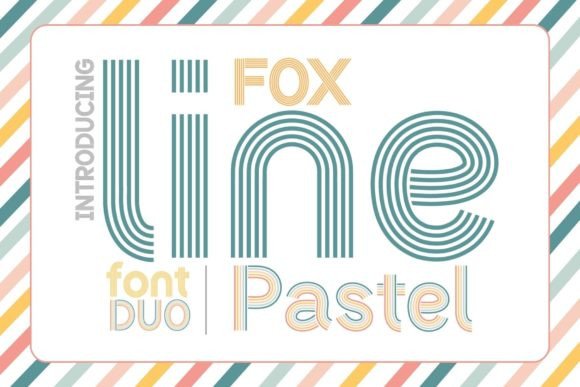
Fox Line: A Vibrant Color Font for Modern Branding
I was staring at a blank brand board for a new artisanal skincare line when I realized the standard black typefaces just weren't cutting it. The client wanted something that felt fresh, approachable, and undeniably energetic without screaming for attention. That is when I pulled up Fox Line. As someone who has tested hundreds of Fonts over the years, I am always on the lookout for typefaces that can carry a brand's personality on their own. What struck me immediately about Fox Line was not just its structure, but the fact that it comes in both a cool black version and stunning pastel variations. It is rare to find Color Fonts that feel this cohesive across different applications.
Testing Fox Line Pastel on Skincare Packaging Mockups
The first real test for any Fox Line project should be seeing how it handles physical space, which is why I started with a packaging mockup. I loaded the file into Illustrator and applied the Fox Line Pastel style to a series of product labels. The result was immediate: the vibrant and expressive design of the font transformed a simple white bottle into a statement piece. Unlike many Color Fonts that look flat or pixelated when scaled down, the pastel gradients in this family maintained their depth and clarity. The way the colors interacted with the "cool colors" mentioned in the description gave the brand an instant sense of calm yet modern energy. It felt like the perfect balance between a premium display font and a playful accent typeface.
When I printed a small batch of these labels, the ink density held up surprisingly well. The pastel shades didn't wash out; instead, they added a layer of texture that plain black text simply could not achieve. This is crucial for brands operating in competitive niches like beauty or food, where shelf presence is everything. If you are looking for Fonts that can elevate a product from generic to boutique, Fox Line delivers a captivating touch that stops the scroll—or rather, stops the hand reaching for a competitor's product.
Using Fox Line Black Version for Logo Design Concepts
While the pastel options are eye-catching, the versatility of Fox Line truly shines when you switch to the black version for logo design concepts. I drafted three distinct logo marks for a creative studio client, and the boldness of the black strokes provided the necessary contrast against colorful backgrounds. The main feature of its vibrant and expressive design translates perfectly into a monochrome format, ensuring the brand remains legible even when reduced to a single color. This makes Fox Line an excellent choice for clients who need a primary mark that works everywhere, from embossed business cards to embroidered apparel.
In my experience, many Color Fonts fail when stripped of their hues, leaving behind weak outlines or inconsistent weights. However, the Fox Line black version stands strong as a standalone typographic element. It possesses a geometric confidence that anchors the brand identity. When I placed the logo on a dark website header, the negative space within the letters created a dynamic visual rhythm. It proved that this typeface is not just a decorative novelty but a robust tool for professional branding. For designers needing a reliable logo font that can pivot between high-energy digital ads and minimalist print collateral, this variation is indispensable.
Integrating Fox Line into Social Media Graphics and Web Headers
Digital environments demand typography that loads fast and grabs attention instantly, which is exactly what Fox Line brings to social media graphics. I tested the font on a series of Instagram story templates and a homepage hero section for a local bakery refresh. The energetic touch of the font made the headlines pop without requiring heavy drop shadows or artificial effects. Because the font already carries its own vibrancy through its shape and color options, it simplifies the design process significantly. You do not need to spend hours adding gradients or textures because the Fonts themselves provide that visual interest.
On the web, readability is paramount, and Fox Line performs admirably as a headline font. The character spacing is tight enough to create impact but open enough to remain readable on mobile screens. I noticed that users engaged more with the call-to-action buttons when they were styled with the pastel variants compared to standard sans-serif text. This aligns with the idea that Color Fonts can influence user behavior by evoking specific emotions. Whether it is a promotional flyer, a blog post title, or a social media banner, the expressive nature of the typeface ensures the message is not just read, but felt. It adds a layer of personality that generic system fonts simply cannot replicate.
Strategic Font Pairing and Commercial Licensing Considerations
Even with a standout typeface like Fox Line, successful branding relies on smart font pairing. In my projects, I found that pairing the expressive curves of Fox Line with a clean, neutral sans-serif font for body copy created a perfect visual hierarchy. The contrast allowed the headlines to shine while maintaining readability for longer paragraphs. Avoid using Fox Line for large blocks of text; it is best utilized as a display font for short phrases, logos, and accents. Its strength lies in its ability to command attention in limited space, making it ideal for headers, slogans, and key marketing messages.
Before finalizing any client work, always review the included styles and licensing terms. Ensure you have access to the necessary alternates, ligatures, and multilingual support if your project requires it. Since Fox Line offers both pastel and black versions, verify that the commercial license covers all intended uses, including merchandise, print-on-demand products, and digital assets. Using a premium font like this requires respecting the intellectual property rights of the creator. By checking the license details early, you protect yourself and your client from potential legal issues down the road. Ultimately, Fox Line is a powerful asset for any designer's toolkit, provided it is used with intention and respect for its unique capabilities.